Your study plan until exam day. From your slides.
Learngine plans your studying from your first upload to exam day. Just say how much time you have today. Lumi picks the topic and exercise, and before the real exam, you take a mock exam just like in the lecture hall.
- Available in German
- From your own slides and notes
- Phone and large screen
- Data stored in the EU
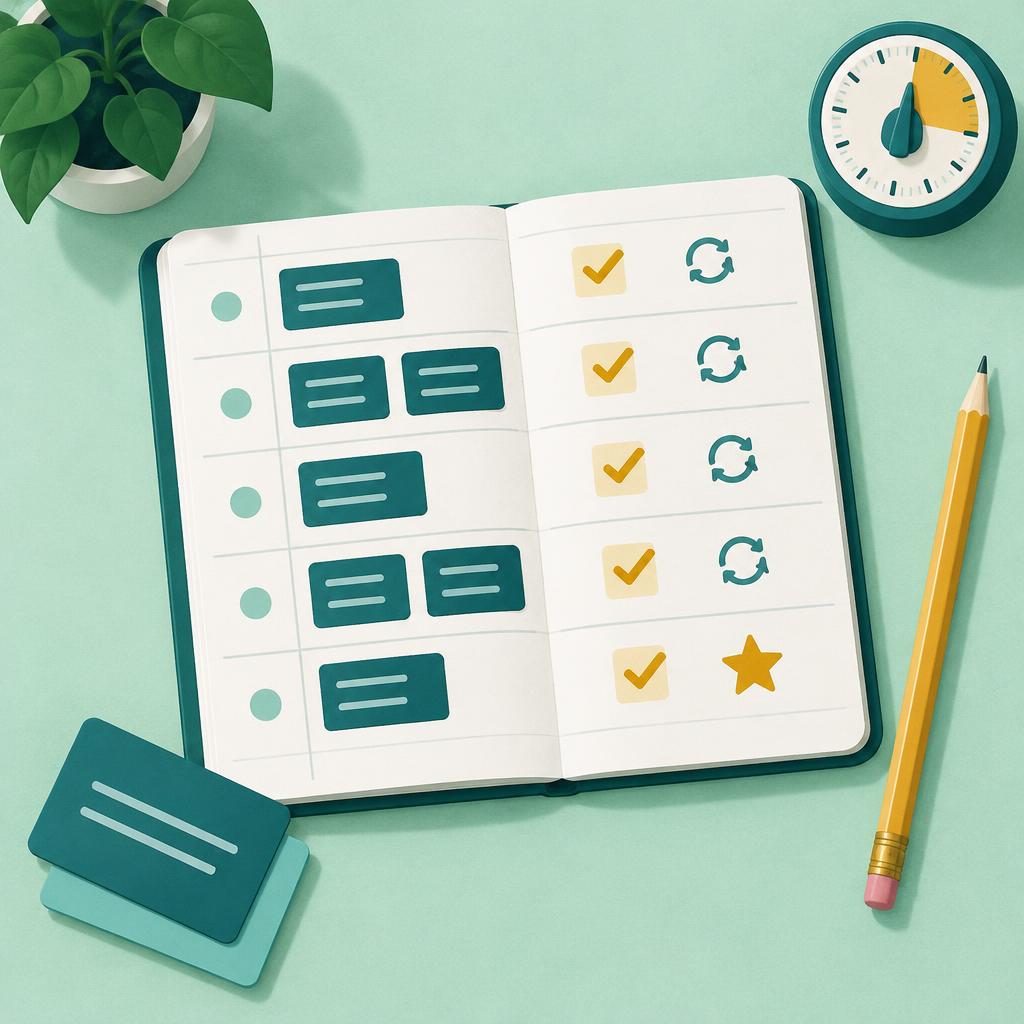
How your study plan takes shape
Upload your material
Upload your lecture slides, including your handwritten notes. Import your curriculum using a link from your Moodle course area, a PDF, a photo or text.
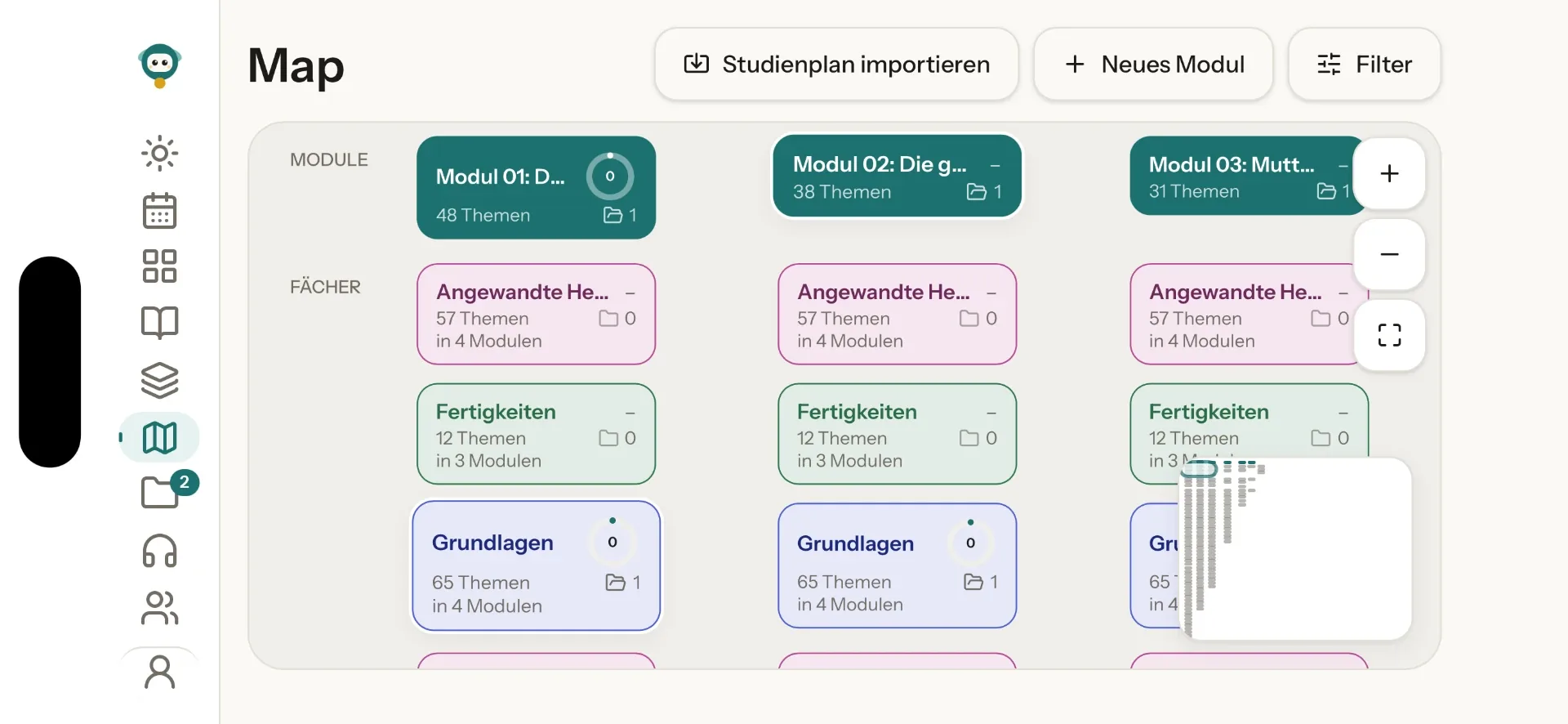
Learning objectives become topics
Learngine finds the learning objectives and turns them into topics, each with one key point. Material relevant to your exam gets more weight.
Exam date in, study plan out
Learngine works backwards from your exam date to schedule topics and reviews. The intervals adapt to what you already know confidently.
Just one decision each day
10, 25 or 40 minutes? That’s all you need to decide. Lumi chooses the right topic and format: flashcards on the train, a podcast on your way home, images and quizzes at your desk. Things you didn’t know come back sooner. Things you know well can wait longer.
Example: a Tuesday, 9 days before your anatomy exam
- Journey to university · 12 min · Podcast recap of your weakest topic
- Lunch break · 10 min · Flashcards due today
- Evening · 25 min · Images: name the shoulder structures, then a quiz
Example. Your plan is based on your material, learning objectives and exam date.
If you want, reminders and study prompts arrive on your phone via Telegram.
Exercises that work together in your plan
Learngine has eight exercise formats. All are created from your material and linked to your learning objectives. Here are two examples:
Podcast
Two voices, one topic, ten minutes. The podcast focuses on what you don’t yet know confidently and appears as a block in your plan—for example, on your journey to university. Each chapter links straight to its topic, followed by flashcards or a quiz. Available offline.
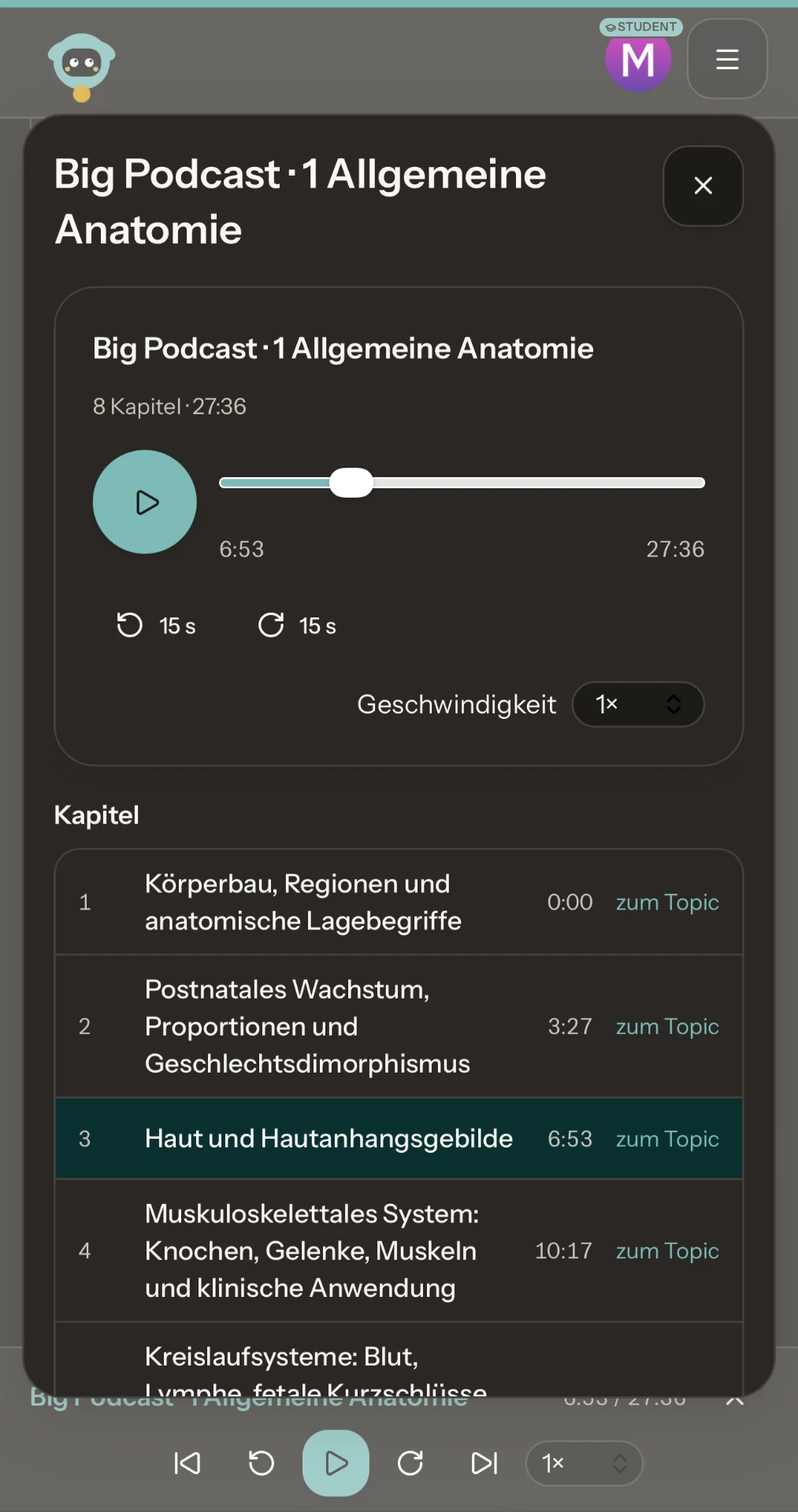
Chapters with topic links
The “go to topic” link beside each chapter takes you to the related topic.
Recall it afterwards
After listening, Lumi suggests flashcards or a quiz on the same topic.
Listen offline
For the train, workouts and your journey home.
Images
Labels on illustrations from your material are hidden, and you name them yourself, term by term. Choose “Got it” or “Again” to decide what comes back. Lumi schedules the illustrations alongside your other exercises.
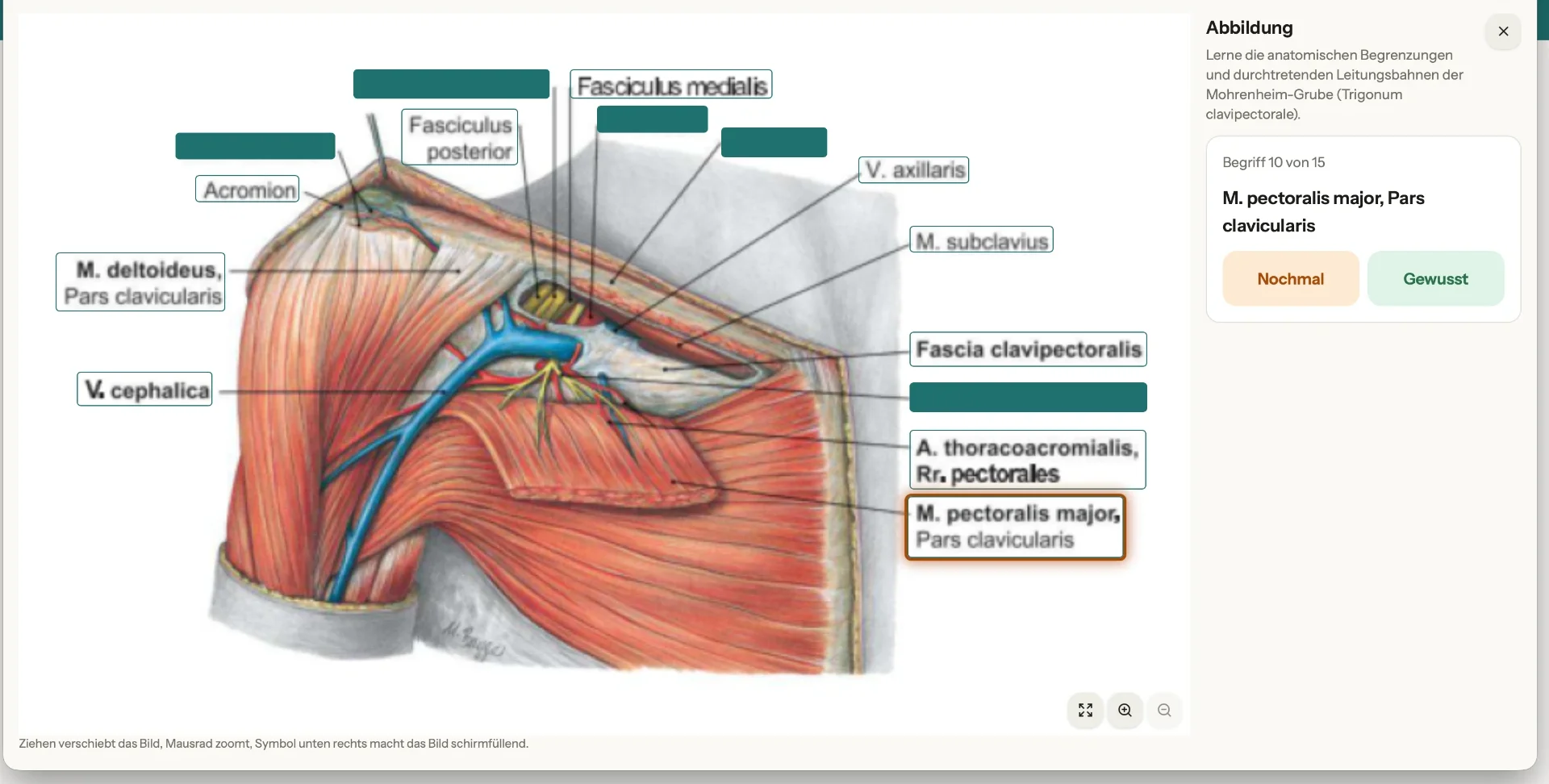
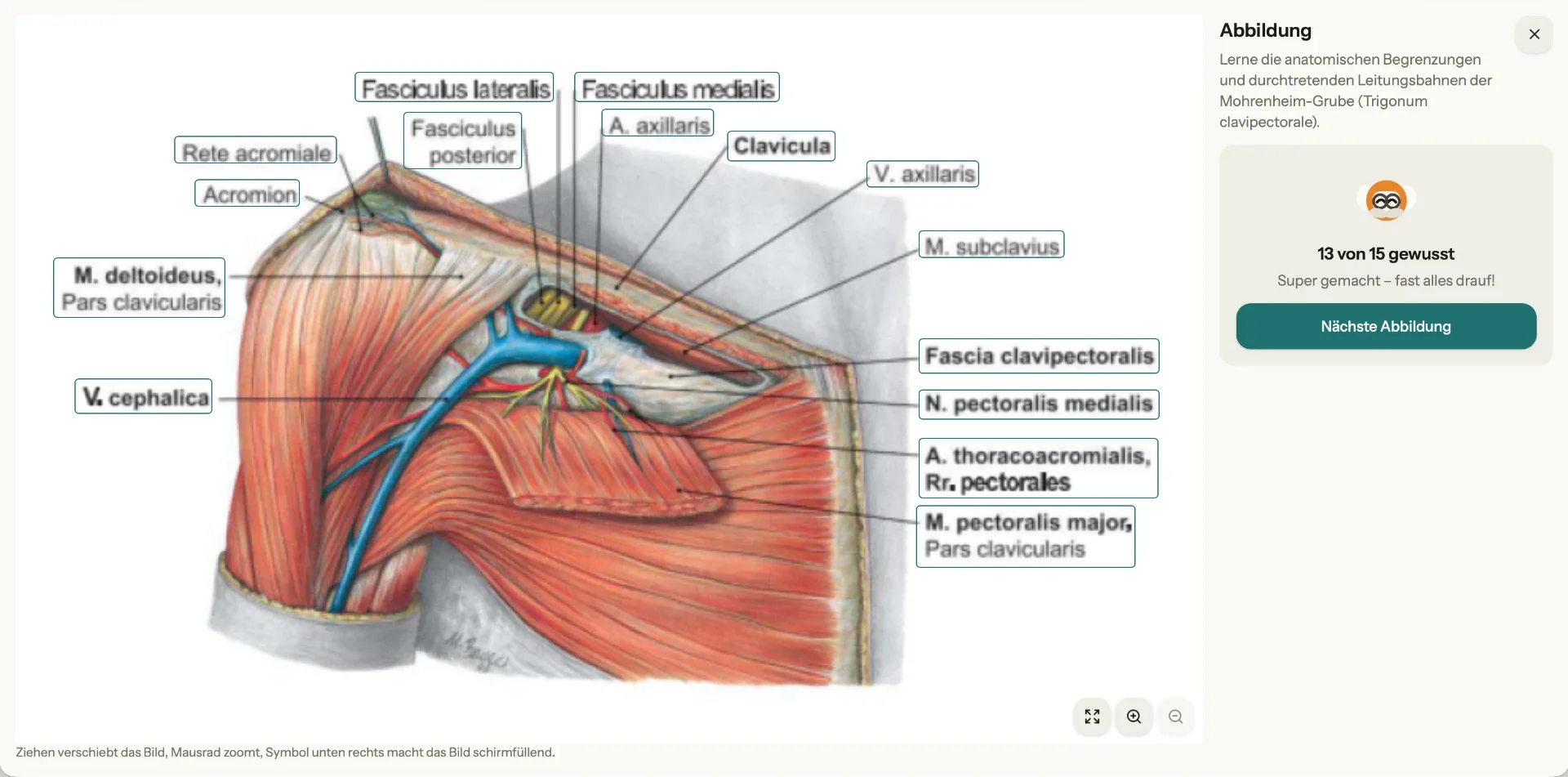
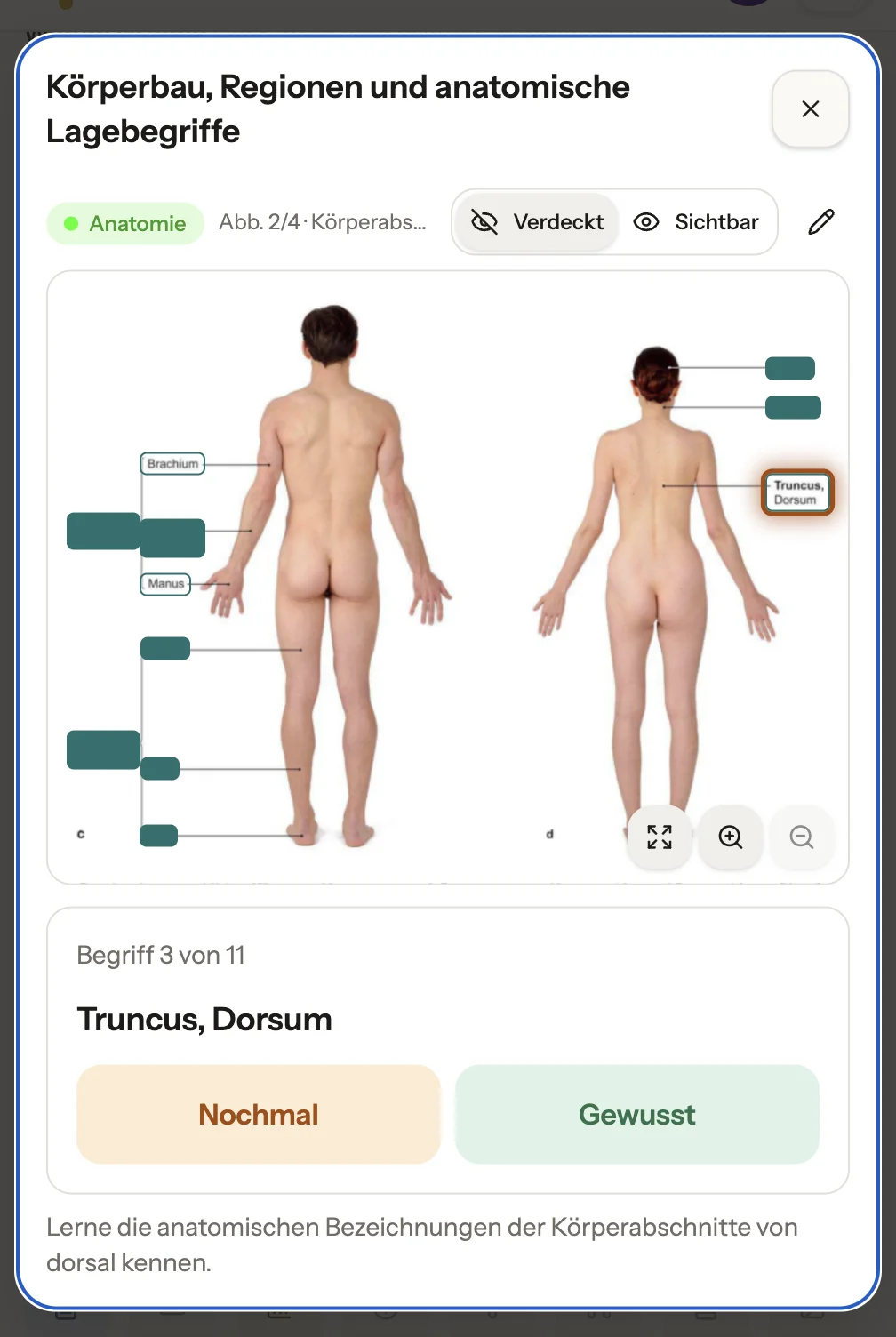
Also in your plan: Flashcards, Quiz, Abstract, Diagrams, Concept Map and Technical Terms.
Take the exam once before it counts.
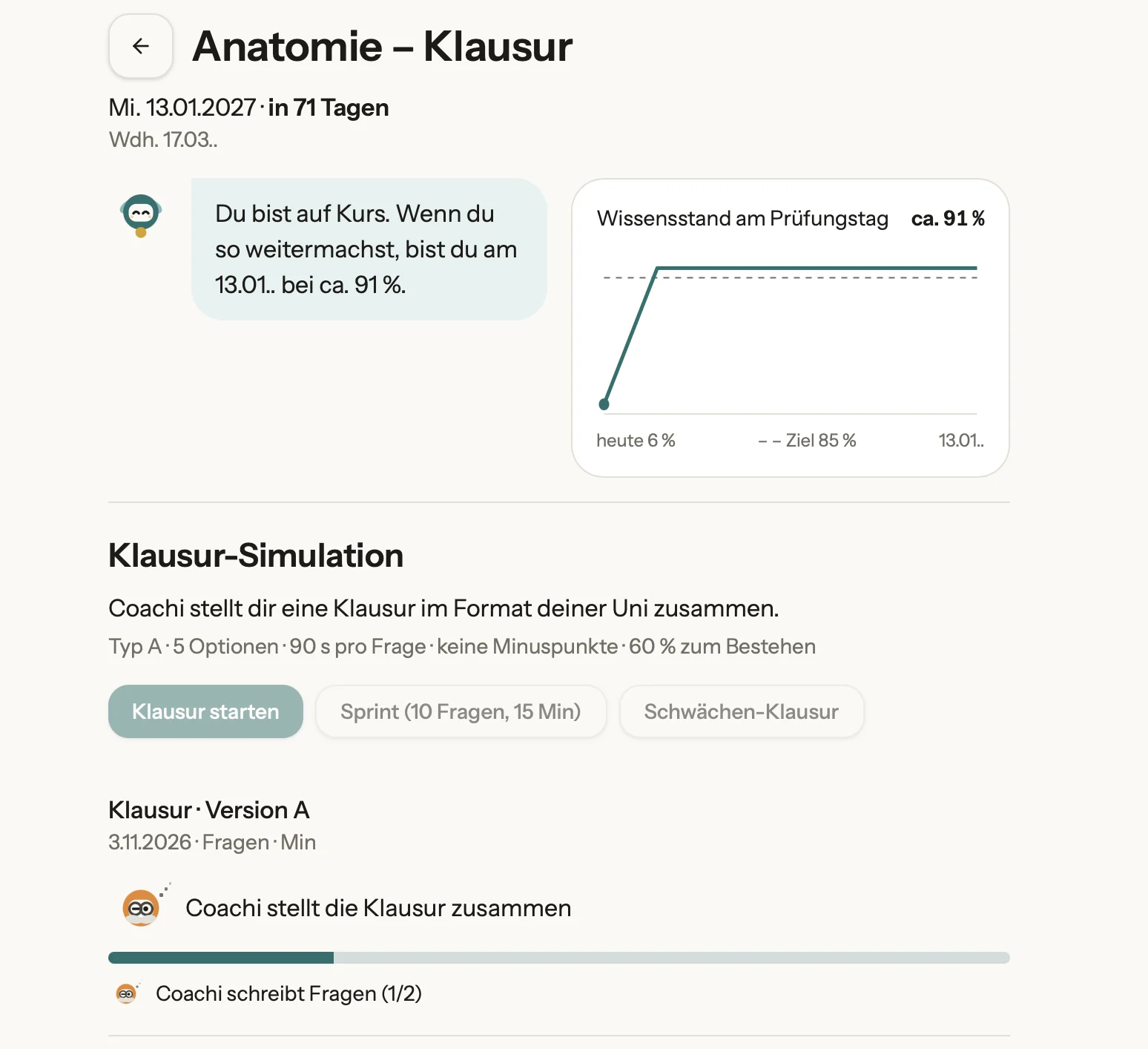
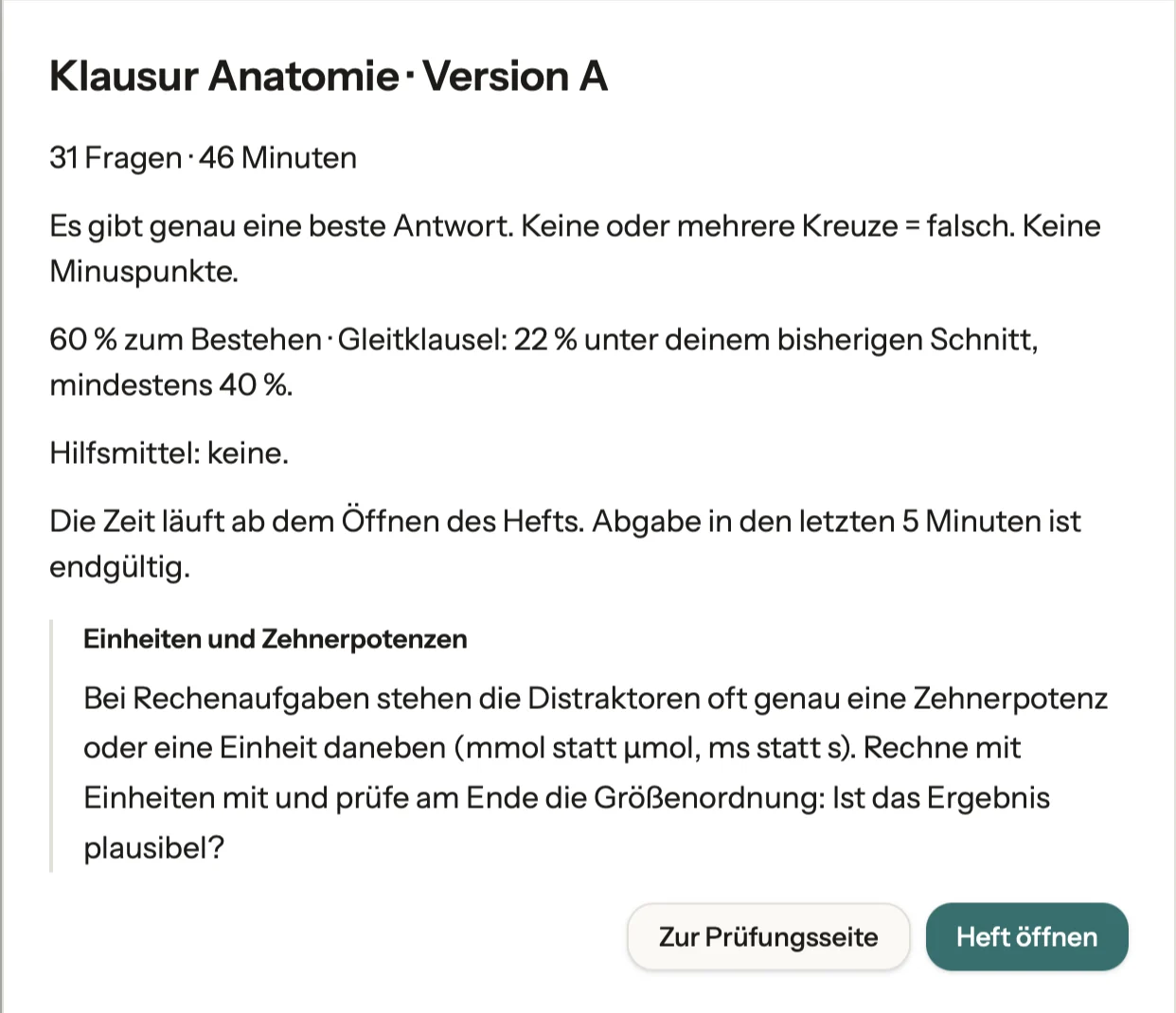
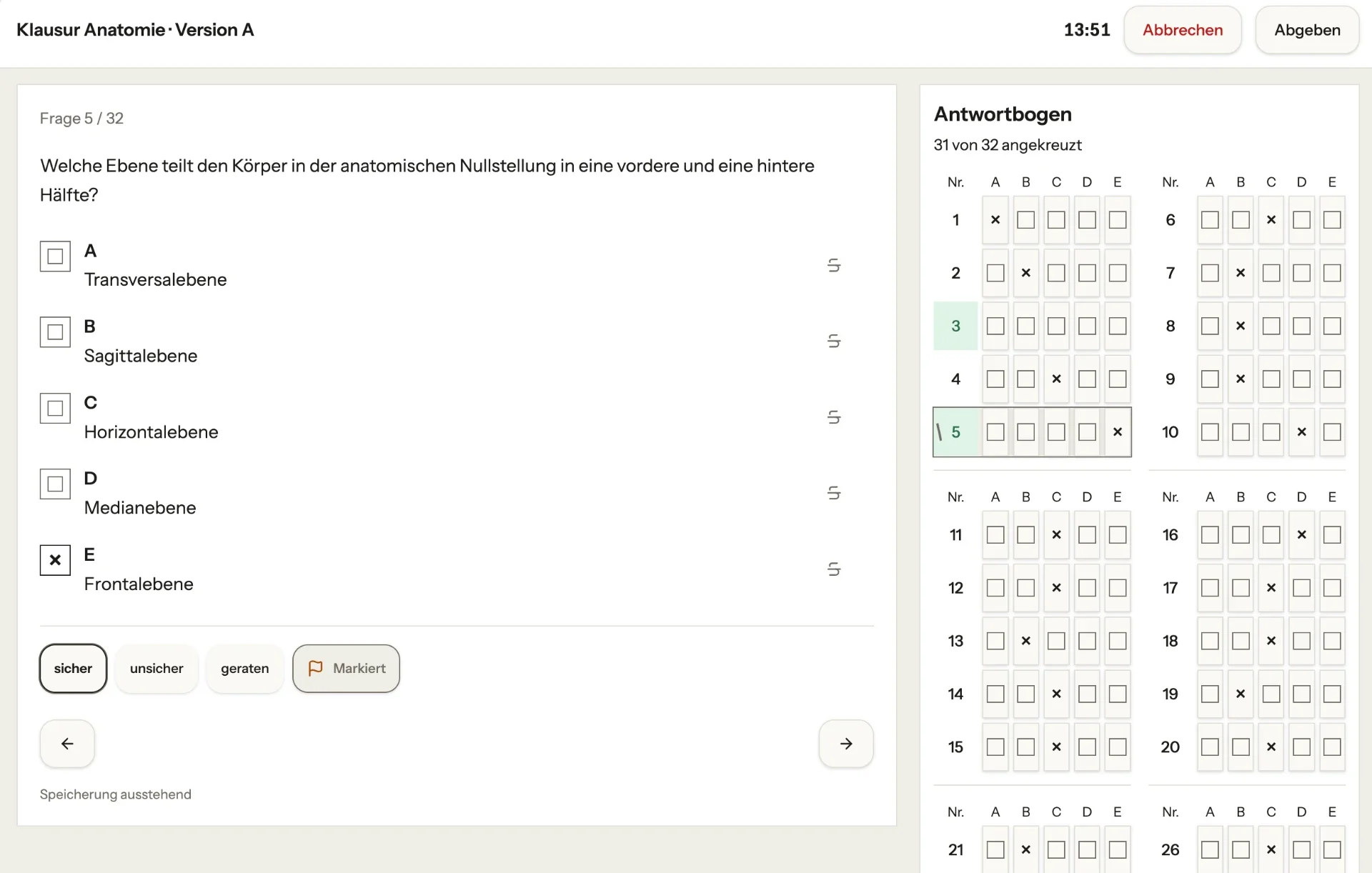
Learngine shows how many days remain until each exam and where you stand today. Coachi puts together a mock exam in your university’s format, complete with a cover sheet, question booklet, answer sheet and timer.
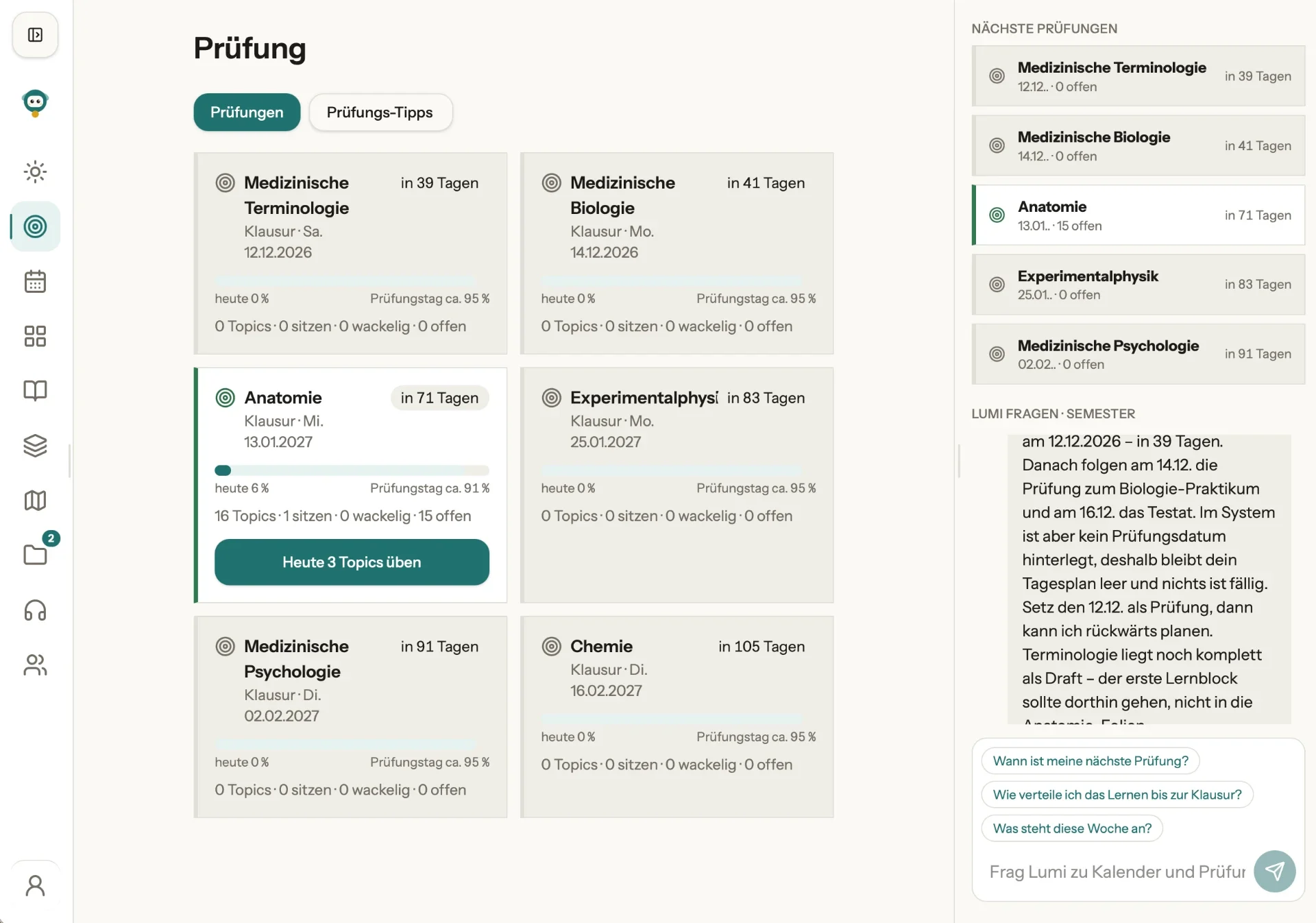
Countdown and forecast
For each exam, see the days remaining, where you stand today and your expected knowledge level on exam day.
An exam just like in the lecture hall
“Type A” single-choice questions with five options, around 90 seconds per question and no negative marking. Open the booklet, mark your answer sheet and flag questions.
Three modes
Real-time mode like the actual exam, a sprint with 10 questions in 15 minutes, or a mock exam focused only on your weak areas.
Grading like at university
A 60% pass threshold with a sliding adjustment clause and grading scale, as set out in examination and study regulations.
Questions built on recognised guidelines
Questions written from your own material according to IMPP and NBME guidelines for multiple-choice questions.
Back into your plan
What went wrong in the mock exam becomes your next focus: Lumi schedules your gaps into the plan, and the next podcast picks up right there.
Based on official examination and study regulations at German universities and international guidelines for writing multiple-choice questions. The mock exam does not replace examination reading materials.
How Learngine differs from a study plan template
| Study plan template or calendar | Learngine |
|---|---|
| You enter topics yourself | Topics come from the learning objectives in your slides |
| A fixed plan, even when you fall behind | The plan adapts to what you already know |
| Studying is a calendar entry | Every block is a ready-made exercise from your material |
| You find out whether you’re ready during the exam | The forecast and mock exam show you beforehand |
Frequently asked questions about the study plan
How much does the study plan cost?
The study plan is included in every plan, including Free for 0 €. Free includes 10 exercises per day and 1 podcast per month. Student and Student Pro offer more exercises and podcasts. All plans are listed on the pricing page.
Is Learngine available in German?
Yes. The app is in German, and your exercises are created from your German-language material.
What does the mock exam look like?
Like a real multiple-choice exam: a cover sheet with rules, question booklet, answer sheet and timer. “Type A” single-choice questions with five options and around 90 seconds per question. Choose real-time, sprint or a mock exam focused on your weak areas.
What happens if I skip a day?
Nothing bad. Learngine reschedules outstanding reviews up to your exam. The daily allowance applies per day, and days off studying don’t cost you anything.
Can I study on the go and offline?
Yes. Learngine works on your phone and on a large screen. Open Learngine once with a connection and your topics are stored on your device. Flashcards, key terms, quizzes, image exercises, summaries and podcasts work offline, and your progress syncs as soon as you are back online. To chat with Lumi and Coachi, create new exercises or upload material, you need a connection.
Where is my data stored?
Learngine stores your data in the EU. For AI features, we only use providers that do not use your content to train their models.
Start your study plan
Upload your first lecture and enter your exam date. Free, in German, on your phone.
Start for freeWant to build your own study plan?
Our guide shows how to spread preparation for several exams over a few weeks.
Read the guide