

IN SHORT
To make a study plan, work backwards from the exam date. Count your material, split it into short study units and schedule every topic at least three times: learn it, review it, review it again. Reviewing means retrieving from memory, not rereading. One buffer day a week keeps the plan alive after a bad day.
Key takeaways

What makes a good study plan
Most study plans list what you will study. A good study plan decides when you will retrieve each topic again. That is what separates a study schedule from a to-do list.
Learning research is fairly clear here. Two methods work again and again across many studies: actively retrieving knowledge and spreading material over several days (Carpenter, Pan and Butler, 2022). They work best together.
One thorough pass per topic
Every topic three times, spaced out
Rereading and highlighting
Retrieving from memory
One subject at a time
Mixing subjects and problem types
A plan with no slack
One buffer day per week
How to make a study plan in 6 steps
- 1Enter the exam date.
Put the date and time of the exam in your calendar. You plan backwards from here.
- 2Count the material.
List every lecture, chapter or topic. Actually count them instead of estimating.
- 3Split it into study units.
A study unit takes 25 to 50 minutes and covers one topic. Now you can see how many units you need before the exam.
- 4Schedule every topic three times.
Learn it once, retrieve it after a few days, retrieve it again shortly before the exam.
- 5Keep the last days free.
The final two to three days are for practice exams and open questions, not new material.
- 6Buffer and evening check.
One free day a week catches whatever was left over. Each evening, five minutes: tick off what's done, move the rest to the buffer.
Study schedule template: three weeks to the exam
This is what a simple study schedule for one exam in three weeks looks like. Copy the rows onto your own material. In the UK this is often called a revision timetable.
| Week | Learn new | Review (retrieve) | Buffer |
|---|---|---|---|
| 1 | first half of the material | flashcards on everything from week 1 | 1 day |
| 2 | second half of the material | quiz on week 1, flashcards on week 2 | 1 day |
| 3 | nothing new | practice exam, work through mistakes, open questions | last 2–3 days on this subject only |
Several exams close together? The study plan for exam season helps. For a whole semester, start with the study plan from the module handbook.
The most common mistakes
How Learngine does it
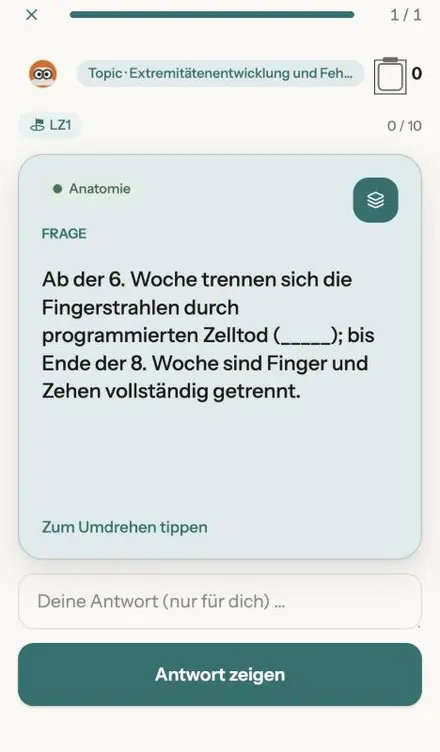
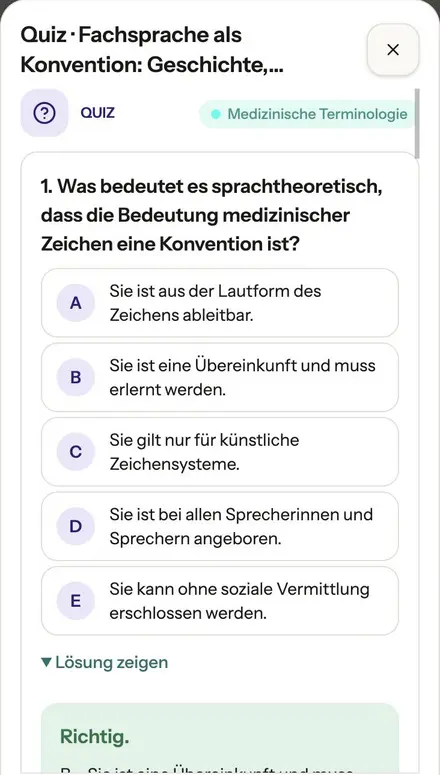
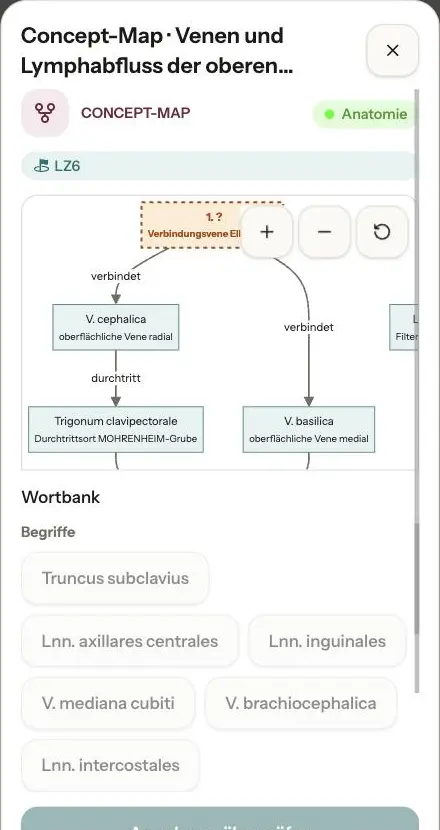
You enter your exam dates and upload your slides and notes. The AI turns them into exercises: flashcards, quizzes and practice exams. You have to solve them yourself.
Learngine spreads exercises and reviews so that every subject comes up in time and the next exam gets the biggest share. Every day, Lumi tells you what's up next in 10, 25 or 40 minutes. If you miss a day, Lumi replans.


Frequently asked questions
How far ahead of the exam should I make a study plan?
Early enough for every topic to come up at least three times. For one exam that is usually two to four weeks, for several exams more like four to six.
How many hours a day should I plan?
Realistic beats ambitious. A plan with fewer hours that you stick to beats a packed plan you drop after three days. Count only focused study time.
What if I fall behind my study plan?
Don't push everything back. Use the buffer day and prioritise: what comes up often in past papers goes first. Cut details, not whole topics.
Do I need an app for a study plan?
No, paper or a calendar is enough. An app is worth it if you don't want to space out the reviews yourself or are planning several exams at once.
Show sources (3)
- Carpenter, S. K., Pan, S. C. & Butler, A. C. (2022): The science of effective learning with spacing and retrieval practice. Nature Reviews Psychology, 1, 496–511. Article
- Cepeda, N. J., Vul, E., Rohrer, D., Wixted, J. T. & Pashler, H. (2008): Spacing Effects in Learning: A Temporal Ridgeline of Optimal Retention. Psychological Science, 19(11), 1095–1102. PubMed
- Rohrer, D. & Taylor, K. (2007): The Shuffling of Mathematics Problems Improves Learning. Instructional Science, 35(6), 481–498. Summary